Too too shy-making

A word I discovered while writing my shyness book: ‘shy-making’. In his 1930 novel Vile Bodies, Evelyn Waugh had nailed the polarising private slang of the bright young things of the previous decade, in which everything was either ‘divine’ or ‘bogus’ or socially mortifying: ‘too, too shaming’, ‘perfectly sheepish’ or ‘shy-making’. ‘As soon as I get to London,’ say Agatha Runcible in Waugh’s novel, ‘I shall just ring up every Cabinet Minister and all the newspapers and give them all the most shy-making details.’ The word reappears in Brideshead Revisited, published 15 years later. On showing Charles Ryder the art nouveau chapel at Brideshead, Sebastian Flyte says, ‘It is a bit shy-making, isn’t it?’ 

Waugh learned this vocabulary from the ‘Guinness set’. For this group of rich and fashionable young people, supposedly inedible food, or sometimes cocaine, was ‘ill-making’. The right antidote – or alcohol – was ‘very better making’. But someone opening the curtains while a bright young thing was still in bed and hung over was ‘blind-making’.

Uninspirational quotes

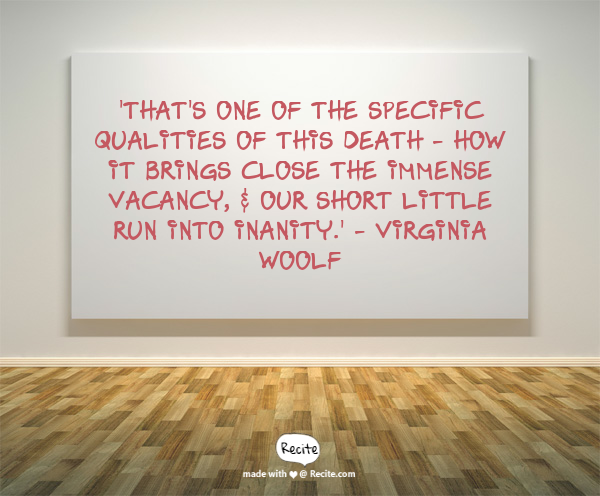
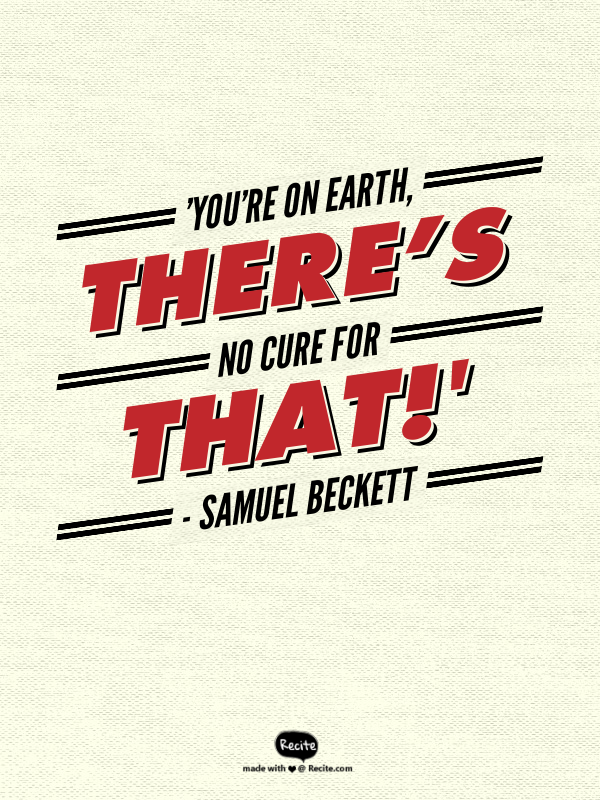
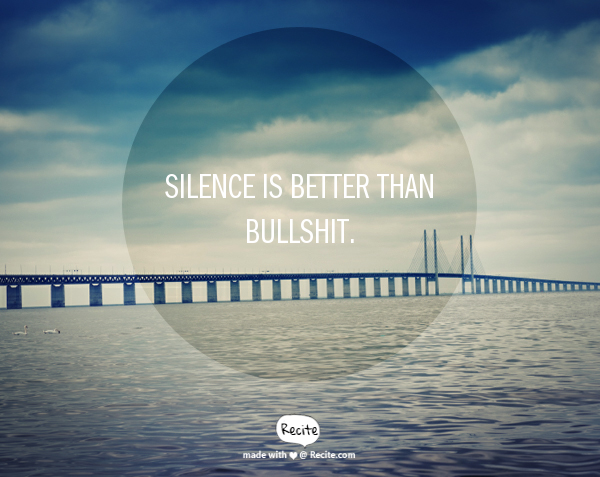
One of the new literary forms of our age is that bastard son of the La Rochefoucauldian aphorism, the ‘inspirational quote’. The kind of tea-towel philosophy that used to be restricted to tea towels is now everywhere: on T-shirts; plastered on to whiteboards in the foyers of Tube stations; scribbled on chalkboards outside coffee shops; and, especially, pasted on to jpegs that are then posted all over social networks, with a background of a blue sky, a sunset or a seascape, or a picture of Gandhi or Steve Jobs with a faraway look. In the end, we only regret the chances we didn’t take. If you’re brave enough to say goodbye, life will reward you with a new hello. Goals are just dreams with deadlines. Sometimes misattributed, often untrue and invariably banal, they are liked, favourited, shared and forgotten, the aphoristic equivalent of a sugar rush. As an urgent corrective, I suggest that we share some uninspirational quotes. Here is a modest start:

recite-12mdbrb

recite-1kgxgof

recite-1hqvnwt

recite-1g1r904

Animals with personality

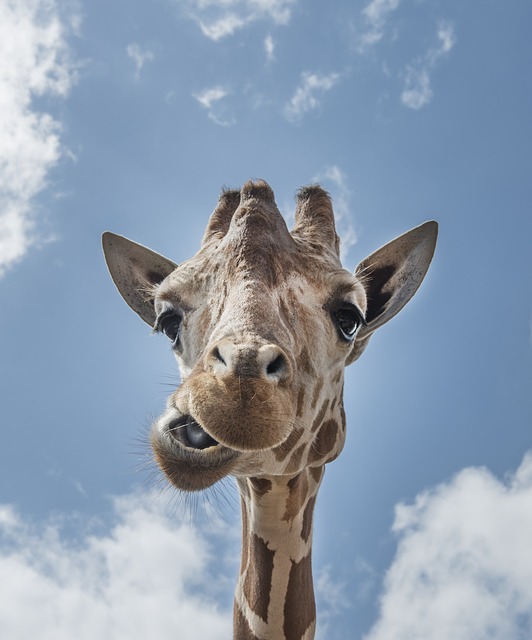
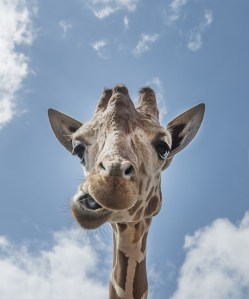
giraffe-556893_640

In the BBC children’s programme Animal Magic, which ran from 1962 to 1983, there were filmed inserts, shot at Bristol Zoo, in which the presenter Johnny Morris played a zookeeper. Morris would also impersonate and voice the animals, who acquired names and personalities – Christina and Wendy the elephants, Dottie, the French ring-tailed lemur (named after Dorothy Lamour), Lucy the llama, Brolly the umbrella cockatoo, and so on. Morris gave each animal human traits: giraffes were patrician aristocrats, sea lions were crusty old generals, llamas looked down their long noses with a withering sense of superiority. The Natural History unit was always uneasy about this anthropomorphism, which may have contributed eventually to the show being cancelled, much to Morris’s dismay.

However, I discovered while writing my shyness book that the study of ‘animal personality’ – an oxymoron, surely, because only a person can have a personality? – is a flourishing field. One of the central concepts in this field is what is called the ‘shy-bold continuum’. In all animals (perhaps including humans), so the theory goes, there is a trade-off. We have to be bold in order to find food and reproduce (very important), but also cautious and risk-averse to avoid being eaten by someone or something else (even more important, perhaps).

The serious scientific study of evolved shyness in animals began with the domestic dog. One study conducted in 1944 found that out of 178 dogs bred in a laboratory at Cornell University, 46 per cent were shy and unfriendly, in spite of all attempts to befriend them. They traced this back to the influence of a very shy Basset Hound brood bitch called Paula, known as a bad ‘fear-biter’, who had produced a third of the puppies.

The study of animal personality proceeds by neat and nifty little experiments. Anne Hedrick, a biologist at the University of California, Davis, collected male field crickets from a football pitch and divided them up according to the length of their trills. When she rehoused them in laboratory terrariums, the long singers took longer to venture out than the short singers. They were offsetting the greater risk of long singing with greater shyness. Meanwhile, the marine biologist Mark Briffa, studying anemones along the Devon and Cornwall coasts, used a small jet of sea water to trigger their ‘startle response’, causing them to retract their tentacles, and then measured how long it took for them to return to a normal state. He discovered, of course, that anemones showed differing levels of shyness and boldness.

The shy-bold continuum has now been found in hundreds of animals: western grass spiders, limpets, water striders, sharks, great tits. That certain animals are ‘shy’ has of course been known for centuries by the humans who try to catch them. ‘Fish have temperaments various as their captors: they are shy, bold, cowardly, volatile, sulky, or determined’, wrote William Peard in A Year of Liberty: or Salmon Angling in Ireland in 1867.

Techno-faith

From Hugh Aldersey-Williams’s new book, The Adventures of Sir Thomas Browne in the 21st Century:

‘It is hard now to recreate a sense of the almost complete impossibility of not being a religious believer in seventeenth-century England. But as I enter the Apple Store, systematically laid out with its central entrance door and an attractively illuminated high table at the far end, a parallel comes to mind. Digital technology seems to fill a large part of the mental space we reserve for faith. (Art, which is often put up as a candidate, is the opium only of a minority.) We depend on technology for the smooth running of our daily lives, if not for our salvation. We make obeisance to it, we feel obliged to buy into the whole package, rather than selecting and rejecting individual technologies. There is the familiar choice between minutely differentiated sects (Apple or Microsoft), but all must share the same basic creed. Upgrades are like revisions of dogma in which we have no say, but which we are bound to go along with anyway. To reject the technological is to declare oneself a heretic, a position as inconceivable now as declaring oneself an atheist in the 1600s.’ (p. 212)

The hoodies of the bird world

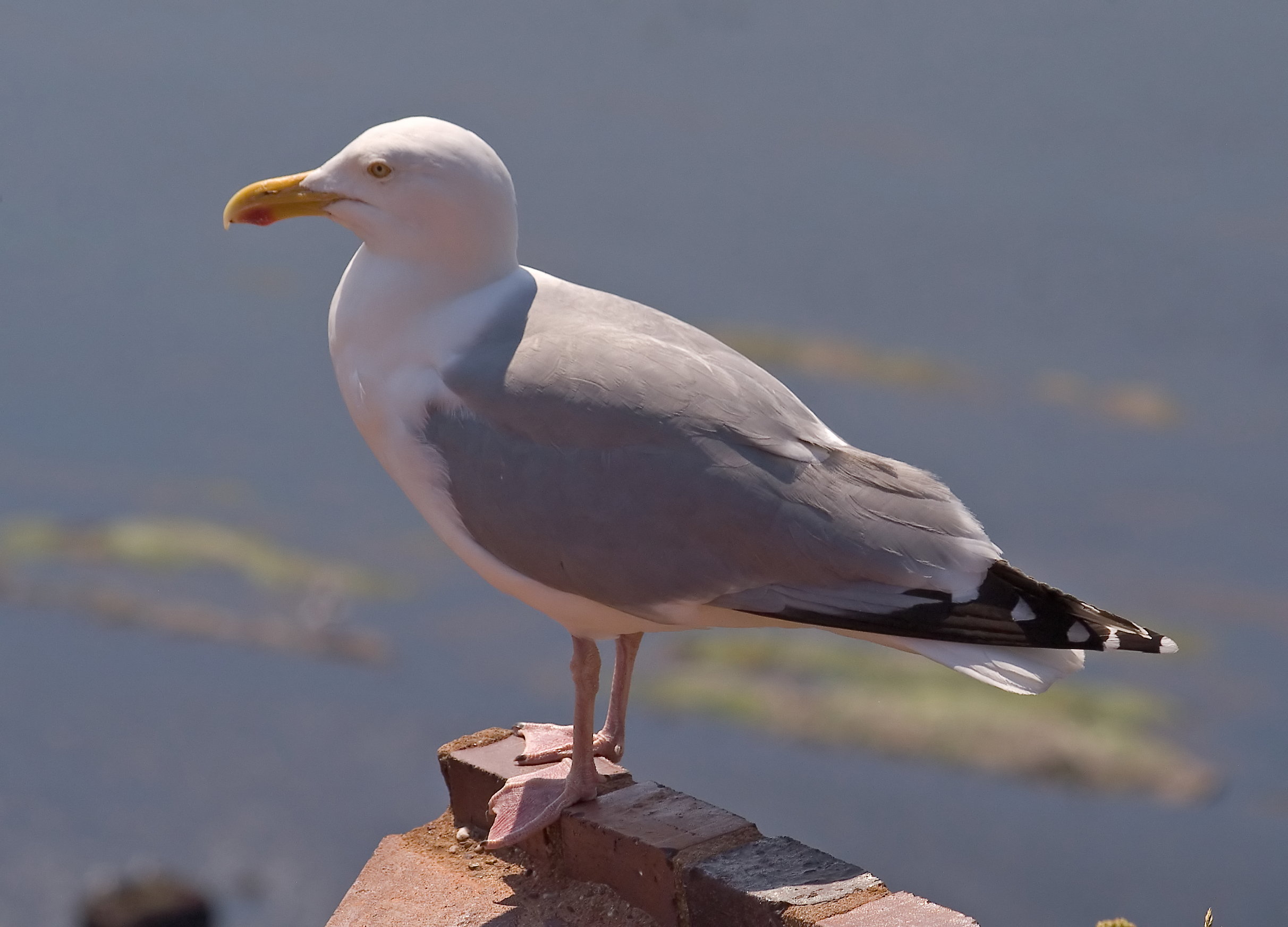
herring gull

Our prime minister has called for a ‘big conversation’ about herring gulls, which in the space of a tabloid week have become the teenage hoodies of the bird world. Live and let live, I say, but it certainly seems that they are becoming noisier and more numerous in the centre of Liverpool, where I work. Last week I even found a baby gull sheltering by the staff entrance to our building. The word ‘seagull’ to describe the herring gull is increasingly inaccurate. You will even see gulls in landlocked Birmingham because they have flown up the Bristol Channel and followed the M5, mistaking it for a river. But then I suppose seagull is no more of a misnomer than ‘herring gull’ – it does eat herrings, but will eat pretty much anything else as well, including chips it hasn’t paid for.

The cry of the herring gull at the start of Desert Island Discs has never made much sense. You are far more likely to hear gulls screeching around inland landfill sites than around Pacific islands. The herring gull’s cry, somewhere between a mournful lament and a manic laugh, has long invited anthropocentric projections. According to Stefan Buczacki’s Fauna Britannica, gulls were believed to house the souls of the dead, especially sailors drowned at sea – which is why, as with the albatross, it was bad luck to kill one. In British coastal villages, fishermen were supposed to turn into gulls when they died, and a gull flying against the window of a house was a warning that any family member at sea was in mortal danger.

In 1953, the great animal behaviourist Niko Tinbergen published a classic study of Larus argentatus, The Herring Gull’s World. ‘The voice of the herring gull is wonderfully melodious,’ he wrote. ‘There are few sounds as evocative, as stirring as the profound, plaintive beauty of their calls.’ Tinbergen identified the many different types of herring gull call: call note, mew call, alarm call, courtship call, mating call, trumpeting call, and so on. The trumpeting call is the one you hear on Desert Island Discs – indeed this call used to be so often used for atmospheric effect on radio and TV programmes that sound recordists began to refer to the herring gull as the ‘BBC gull’.

I wonder if the herring gulls themselves are to be included in the planned ‘big conversation’? I would love to know what they are saying, but in years of listening to them every working day, I have never been able to differentiate their calls. But Tinbergen showed that anything becomes interesting, and nuanced, if you listen long and hard enough.

Truth is on the last step down

One of the people I’m writing about in my shyness book is the novelist Elizabeth Taylor, who was shy, and wrote about it beautifully. Her world is one of home-counties commuterly comfort, clipped lawns, bridge and gymkhanas. Nothing much happens in her writing because, for the shy, daily life requires enough courage as it is. She never uses the first person, so you see her characters from the outside, getting glimpses of the thinking, feeling beings swarming on the underside of our social platitudes. Their lives are full of melodrama, lived out invisibly and silently in their own heads.

‘Someone must talk to me, she thought, for it seemed to her that, through lack of conversation, her expression was growing sullen. She tried to reorganise her features into a look of animation or calm pleasure … she put on a little confidence with her pretty frock; but, practising radiant smiles in the looking-glass, she was sure that they were only grimaces.’

Taylor was distraught when, in April 1960, her publisher Peter Davies threw himself under a tube train. When Davies had founded his publishing house in 1926 with the help of his guardian, J.M. Barrie, it was under the unassuming name of Peter Davies Ltd – minus the middle name that would have identified him as one of the Llewelyn Davies children who inspired Peter Pan, a book he loathed being linked with and called ‘that terrible masterpiece’. Taylor saw him as a kindred shy person in a profession that, she felt, relied increasingly on vulgar PR. ‘Peter Davies never gives parties and hates parties, authors and nearly all books,’ she wrote approvingly to another epistolary (and shy) friend, the novelist Barbara Pym. ‘The literary world makes him shudder. He scorns his profession – saying he is a cross between a midwife and a commercial traveller.’

One of my favourite Taylor quotes is a comment she made about her sort-of friend Ivy Compton-Burnett’s work: ‘Truth is on the last step down. We do not climb towards it in any exalted way, but descend down flights of hypocrisy, deceit and self-infatuation to find it lying at our feet.’ (‘A Novelist and her Novels’, Vogue, July 1951, quoted in N.H. Reeve, Elizabeth Taylor (Northcote House, 2008), p. 4)

Life statistics

stats

‘I’ve always like the idea of having life statistics. How many upturned plugs will we stand on? How much toast will we burn? Will we say “sorry” more often than “thanks”? How many hours will we spend not listening to someone but pretending to? What’s our most frequent lie?’

– Joe Dunthorne, ‘Ghost pots’ in Chloe Aridjis (ed.), Where You Are: A Book of Maps That Will Leave You Completely Lost (London: Visual Editions, 2013)

Small talk dies in agonies

There is no history of stalled or stilted conversations – of those teas where, in Shelley’s words, ‘small talk dies in agonies’. In novels and plays, most conversation is useful or expository and hardly anyone ever struggles for things to say. Even in plays in which the dialogue is supposed to be like ‘real life’, like those of Harold Pinter or Mike Leigh, there is usually a point and a purpose to it (although I do like that desperate line in Abigail’s Party – ‘Have you always had a moustache?’ – and the final scene of Terence Rattigan’s Separate Tables is played out almost entirely in small talk and is all the more heartbreaking for it).

One of the consoling things about writing a book about shyness is discovering people who were even worse at small talk than me. In his memoir of early manhood, The Weald of Youth, Siegfried Sassoon writes of a family friend called Watson – he did not make enough of an impression to be gifted a first name – who could never think of things to say. His conversational opener was ‘Have you been to Macrihanish?’ Since this was a remote golf course on the Mull of Kintyre, it invited only the conversation-closing answer, ‘no’. When all conversation died, Watson had the same failsafe strategy: he revealed that he fed his chickens with salad oil. Sassoon sympathised with Watson, for he was a fellow sufferer. At a party in 1911, he spent the entire evening asking every one he met if they would be in London for the Coronation, and agreeing when they answered that ‘on the whole it would be just as well not to be’.

Alan Turing was astonished by his mother’s ability to persist in small talk with unforthcoming people, to work what he called ‘rope and pickaxe’ in the most inhospitable social terrain. Turing was not prepared to scramble about on even the gentlest slopes of small talk. If he was bored by what he called ‘vapid conversation’, he would simply walk away.

Unlike Turing, I do not regard small talk as a vice. I think of it as a vital life skill, but in my case acquiring it seems to be the work of a lifetime.

A6 notebook

asbury

Now this is a lovely thing: an A6 notebook themed around the A6 road, from the brilliant writing/design team Asbury & Asbury, who always produce such elegantly witty and beautiful objects. You can find out more about their work, including the A6 notebook (for which I wrote the foreword), here. An A5 notebook about the A5 is also planned, and an A4 notebook about … well, you get the idea.

‘I think of the M6 Toll, lined with two million

pulped Mills and Boons; how love is buried

in unlooked for places, kept secret as us.’ – Liz Berry, ‘Trucker’s Mate’ in Black Country, p. 17

The student experience in the 1640s

Another entry for my occasional and necessarily elliptical history of student life, from Ruth Scurr’s new book John Aubrey: My Own Life, a sort of autobiography of the great seventeenth-century antiquary, writer and polymath assembled from his books, letters and other fragmentary writing. In this passage, written in 1642, Aubrey has just enrolled at Trinity College, Oxford:

‘Dr Ralph Kettell, the president of Trinity, often attends our lectures and exercises with an hourglass. He has been president since 1598 – the second president since the foundation of our college in 1555 – and is now almost eighty years old, with sharp grey eyes, white hair and a fresh ruddy complexion. He is over six foot tall, gigantic and terrible in his russet cloth gown, surplice and hood. He drags one foot – his right foot – so we hear him coming before he rounds the corner, like a rattlesnake.

“Turds! Tarrarags!” These are his names for the worst kind of boys. “Rascal-jacks! Blindcinques! Scobberlotchers! Get to your books and lessons, good-for-nothing idlers!” Such are his names for the boys that do no harm but do no work either, idling around the college grove with their hands in their pockets and telling the number of trees, etc.”’

Needless to say, this kind of thing is no longer part of what universities now like to call ‘the student experience’. But Kettell wasn’t all bad:

‘The President is a man of great charity. When he notices diligent boys with little money, whose friends have money, he is wont to drop money in at their windows at night. By day he walks up and down the college, peeping in at the keyholes to see if we boys follow our books or not. We mock him but we love him. “Seneca writes as a boar does piss: by jerks,” he tells us.’ (Scurr, p. 40)